
How fast our tuned models run, November 2026
, 3 min read, By Jaber Jaber
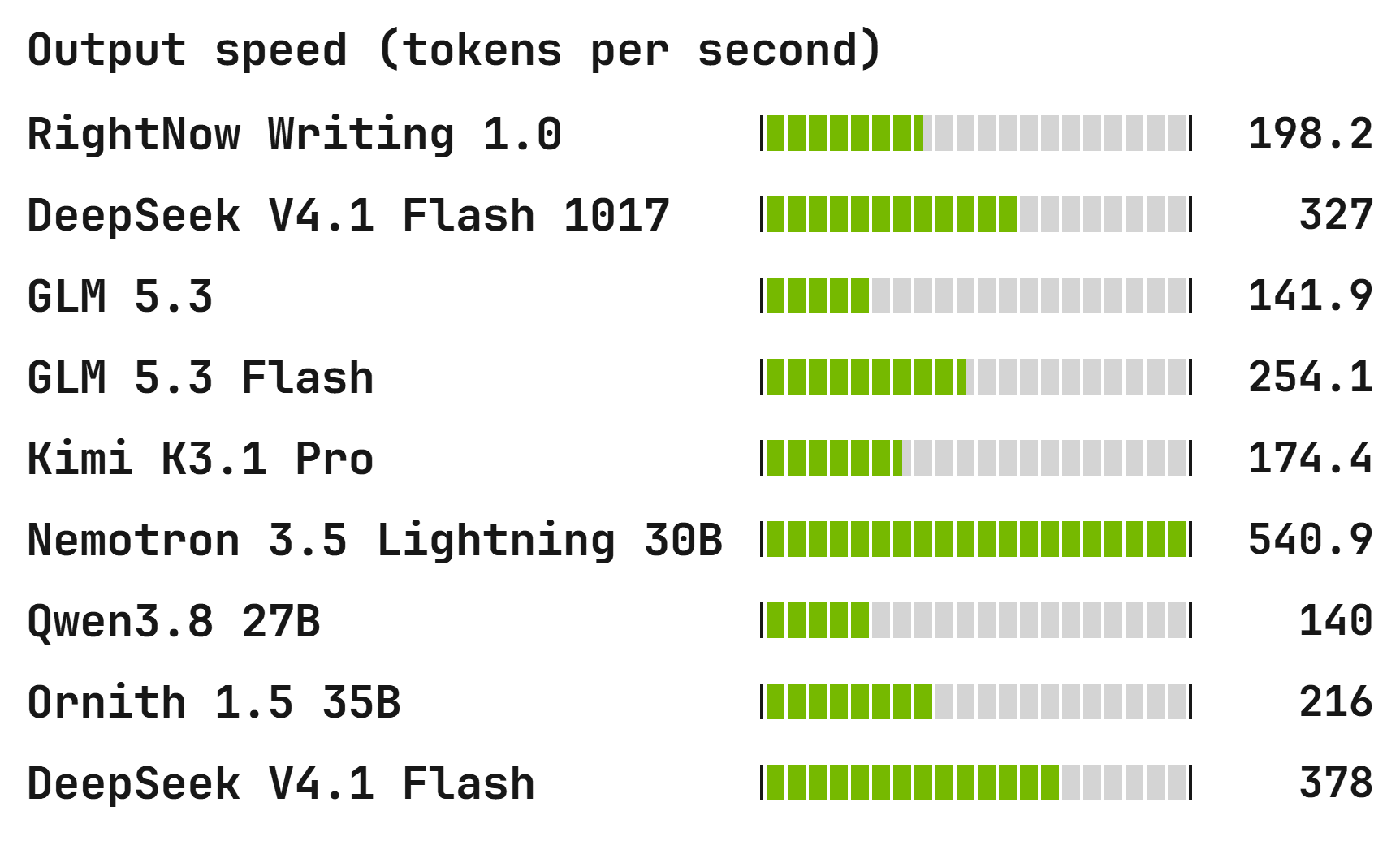
EngineeringOn 28 November 2026, our public model list gave each of its nine models an output speed between 140 and 540.9 tokens per second. Each model's figure is in the table below, with a link to its page.
Bring any Hugging Face model. RightNow AI tunes it down to the GPU kernel and hosts it on private infrastructure, with zero data retention by default. This post gives the speed of each model on our public model list, and shows how a company sets the speed its own model must reach.
How fast do GLM 5.3, Kimi K3.1 Pro and DeepSeek V4.1 Flash run?
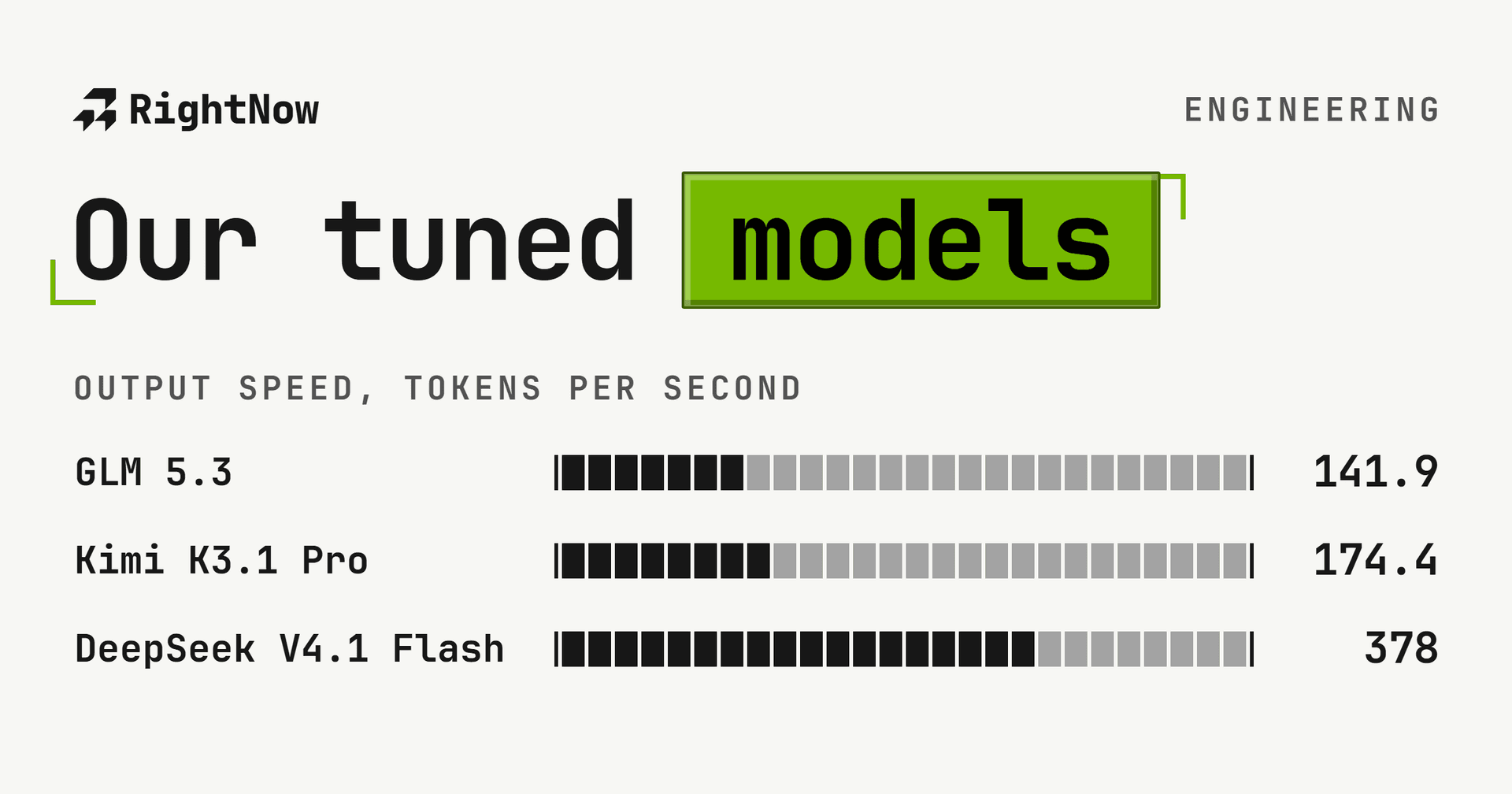
On that list, GLM 5.3 runs at 141.9 tokens per second, Kimi K3.1 Pro at 174.4 and DeepSeek V4.1 Flash at 378. The table gives all nine models in the list's own order, and each name opens that model's page.
| Model | Output speed (tokens per second) |
|---|---|
| RightNow Writing 1.0 | 198.2 |
| DeepSeek V4.1 Flash 1017 | 327 |
| GLM 5.3 | 141.9 |
| GLM 5.3 Flash | 254.1 |
| Kimi K3.1 Pro | 174.4 |
| Nemotron 3.5 Lightning 30B | 540.9 |
| Qwen3.8 27B | 140 |
| Ornith 1.5 35B | 216 |
| DeepSeek V4.1 Flash | 378 |
Each open model runs with decoding, precision and engine settings chosen for that model and its hardware.
Where is each model's speed published?
On its own page in Open models, as its Output speed under Performance. On 28 November 2026 every model on the list had one. Each page reads the same list as this table, so after that day a page can show a different figure.
What do you do with my own model?
Name the model. We tune its GPU kernels, then host it on a dedicated endpoint for your workspace.
Run any public Hugging Face model on a dedicated endpoint that serves your workspace only, priced per GPU hour. Private models on request. The Dedicated page shows the prices and the request form.
How do I set a target speed for my own model?
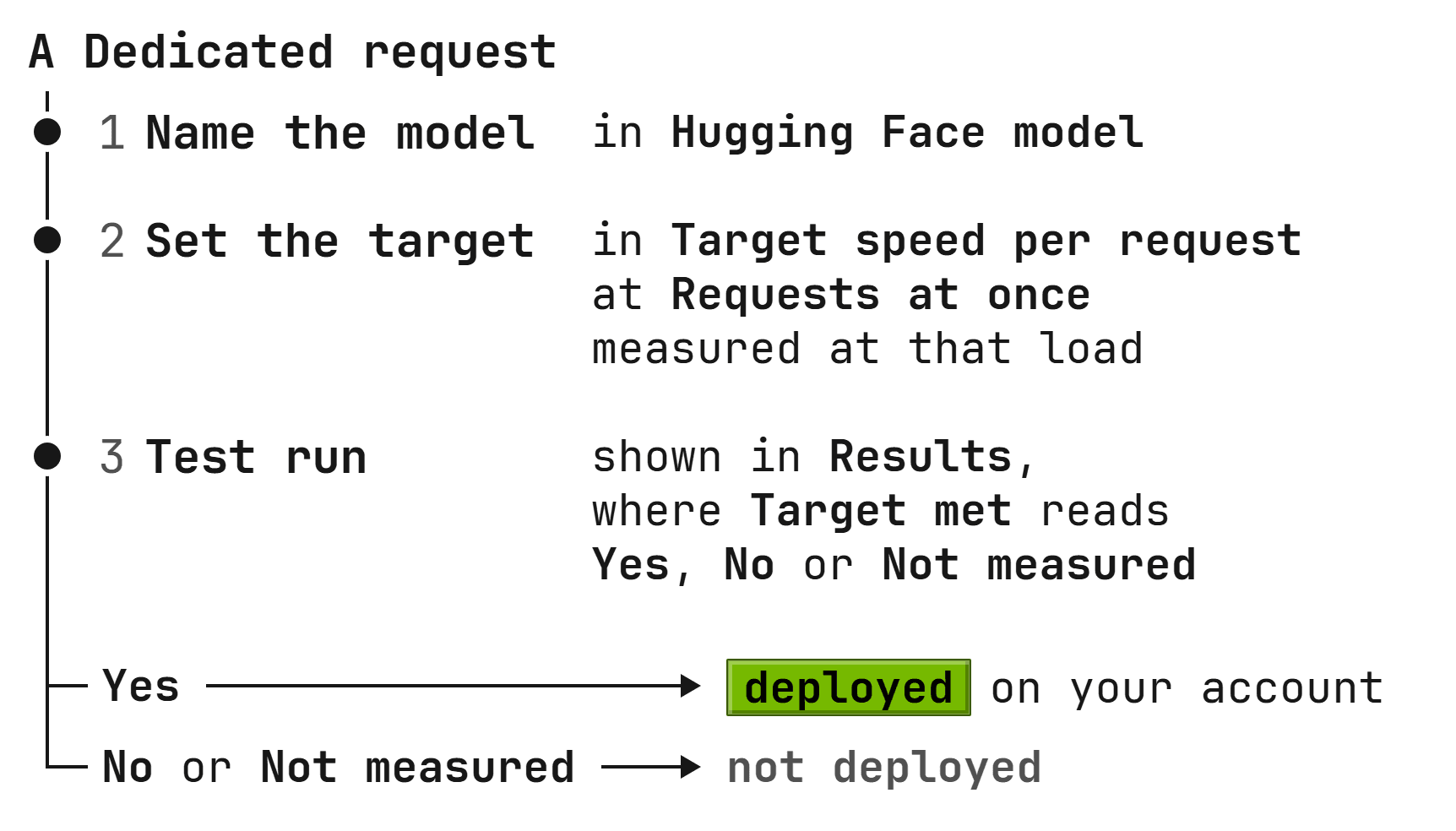
You name the model in Hugging Face model, your target in Target speed per request and the load it must hold in Requests at once. Your target speed is measured at that load.
How is the target checked?
When it is delivered, the request reads Delivered and shows its Results: its setup and a test run. In the test run, Target met reads Yes, No or Not measured.
What happens if a model misses its target?
If it reads No or Not measured, we do not deploy it. If it meets your target, we deploy it on your account.
How do I send you my model?
If you run an open model in production, send us your heaviest workload. We will migrate it within a day and show you speed and cost side by side.
Book your capacity now. We reply by email within a day. The Dedicated deployments guide has every step.